Growing a business is exciting until the moment your building, warehouse, or office simply cannot hold any more people, inventory, or equipment. That gap between ambition and available space is one of the most common growth problems out there, and it catches even well-run companies off guard. The good news is that scaling operations does not always mean signing a long-term lease or breaking ground on new construction right away. With the right mix of temporary solutions, smart contracting, and flexible planning, you can keep growing while you figure out your next permanent move.
Recognizing the Signs You Have Outgrown Your Space

Before you can solve a space problem, you need to know you actually have one. Many businesses assume slow shipping times or scheduling delays are staffing issues when the real culprit is that there is simply not enough physical room to operate efficiently. Throwing more hires at a layout problem only adds more people to the same congested space, which can make output worse, not better. Start by watching for repeated bottlenecks at the same point in your workflow — orders piling up at packing stations, trucks idling at a single loading dock, or technicians waiting for a workstation to free up. If the slowdown happens in the same spot day after day regardless of who is working, that is a layout issue, not a personnel one. Other physical red flags include employees tripping over each other or equipment, aisles too narrow for carts or forklifts to pass safely, and inventory or supplies stored in hallways, break rooms, or parking lots because there is nowhere else to put them. Rising rates of near-miss safety incidents or minor injuries can also signal that your space is working against you. It helps to look at the numbers too. If you are paying for off-site storage, renting pallet space month after month, or routinely turning down orders and appointments because you cannot fit the work in, your square footage has become the ceiling on your growth rather than your talent or your order book.
- Consistent delays getting products out the door, with fulfillment times creeping from same-day to 48+ hours
- Storage overflow into unsafe or unauthorized areas, like blocked fire exits, hallways, or break rooms
- Staff working in shifts or rotating desks just to share limited workspace
- Customers or clients commenting on cramped conditions during visits or deliveries
- Equipment sitting idle because there is nowhere to install or run it, tying up capital in unused machinery
- Rising incident reports or near-misses caused by cluttered walkways and tight maneuvering space
- Inventory errors increasing as stock gets crammed into makeshift or mislabeled locations
- Frequent off-site storage rentals that add cost without solving the underlying space shortage
Adding Temporary Structures to Buy Yourself Room
One of the fastest ways to add usable square footage without committing to permanent construction is through temporary buildings, tents, or modular units placed on your existing lot. These structures can house extra inventory, serve as overflow workspace, or even function as temporary offices while you plan something more permanent. They are quick to install, relatively affordable, and can often be scaled up or down as your needs change month to month.
If your growth involves a larger crew working outdoors or on a job site with limited facilities, a restroom trailer rental can make a surprising difference in productivity and morale. It sounds like a small detail, but when you are adding staff faster than your building can accommodate them, basic amenities become a real logistical challenge. Renting rather than building this kind of infrastructure lets you respond to short-term headcount spikes without a long-term commitment.
Renting Heavy Equipment Instead of Buying It Outright
When operations expand, so does the need for equipment that can move materials, dig foundations, or clear space for new structures. Buying heavy machinery outright is expensive and often unnecessary if the need is tied to a specific expansion project rather than an ongoing daily requirement. An excavator rental gives you access to the exact equipment you need for site prep or land clearing without tying up capital in a machine that might sit unused once the project wraps.
Renting equipment also means you are not responsible for long-term maintenance, storage, or depreciation on machinery you might only need for a few weeks or months. Many rental companies offer flexible terms that let you extend the rental if a project runs longer than expected. This approach keeps your balance sheet lighter and your options more open as you figure out the right long-term footprint for your business.
Bringing in Skilled Trades for Fast, Reliable Upgrades
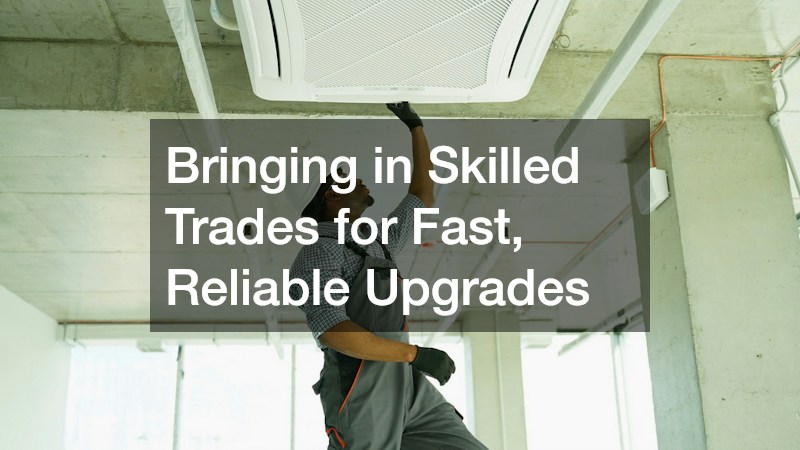
Sometimes the fix for a space problem is not more square footage but better use of the space you already have, and that often requires skilled trades. A licensed plumber can reconfigure water lines to support a new break room, an additional restroom, or equipment that requires a water hookup, all without a full renovation. In many cases, this work can be completed over a weekend or during a planned shutdown, minimizing disruption to daily operations. The key is bringing in these specialists early, before growth demands force a rushed decision. A plumber who understands commercial systems can spot capacity issues in your existing supply lines or drainage before they become a bottleneck, and can advise on whether your current setup can even support the added load. Skipping this assessment is how businesses end up with a beautiful new espresso machine or industrial dishwasher that trips the water pressure the moment it’s turned on. Getting this kind of work done correctly the first time prevents costly downtime later when growth demands are already stretching your team thin. A rushed or improperly permitted job can mean failed inspections, repeat visits, or even a shutdown notice right when you can least afford it. Investing a little more time upfront in vetting a licensed, insured tradesperson typically pays for itself many times over in avoided repairs and lost production hours.
Beyond plumbing, climate control becomes a bigger issue the more people and equipment you pack into a space. Servers, manufacturing equipment, and even dense rows of desks all generate heat that a system designed for a smaller footprint was never built to handle. A professional AC installation can be the difference between a productive workspace and one where employees and machinery both overheat during peak season. Skilled tradespeople bring more than just installation labor — they assess load calculations, ductwork capacity, and airflow patterns specific to your facility’s new layout. That kind of expertise catches problems a general contractor might miss, like undersized units that run constantly or uneven cooling that leaves one corner of a warehouse ten degrees warmer than the rest. Getting this right the first time saves you from costly retrofits down the line. Planning these upgrades early, rather than waiting until a system fails, keeps your operations running smoothly while you scale. A failed unit in July doesn’t just mean discomfort; it can mean halted production, spoiled inventory, or a workforce sent home for the day. Building in a buffer of extra cooling capacity — enough to handle projected headcount or equipment growth over the next two to three years — means you won’t be scrambling to schedule emergency service during your busiest stretch.
Exploring Additional Commercial Space Before You Outgrow It Completely

At some point, temporary fixes reach their limit, and it makes sense to start looking at additional space even if you are not ready to commit to a permanent move. Searching for commercial property for lease in your area gives you a sense of what is available, what it costs, and how quickly you could move if your current space becomes untenable. Many business owners start this search earlier than they expect to need it, simply to understand their options and timeline.
Leasing additional space, even temporarily, can relieve pressure on your existing footprint while you plan a more permanent expansion. It also gives you a chance to test a new location or layout before fully committing resources to it. Treating this research as an ongoing part of your growth planning, rather than a last-minute scramble, puts you in a much stronger negotiating position when the time comes.
Partnering With Contractors Who Understand Growing Businesses

Expansion projects, whether small renovations or ground-up builds, go more smoothly when you work with professionals who have experience scaling for growing companies. A home builder who typically works on residential projects may not be the right fit if you are expanding a commercial facility, so matching expertise to project type matters. Similarly, working with an experienced roofing contractor early in the planning process can prevent costly surprises once construction is underway.
The right contractor relationships also mean faster turnaround when you need work done under time pressure. Businesses that wait until a crisis point to start vetting contractors often end up with fewer choices and higher costs. Building these relationships before you desperately need them gives you leverage and better scheduling options when growth demands quick action.
Choosing Durable Materials for Long-Term Expansion Projects
If your growth plan includes any new construction, whether it is a small addition or a full new facility, material choices matter more than many business owners realize at first. Decisions made during the planning phase determine how much you’ll spend on maintenance and repairs for decades, so it pays to think beyond the upfront construction budget. Roof metal decking has become a popular choice for commercial expansions because it offers durability, fire resistance, and a longer lifespan compared to some traditional roofing materials. Steel decking systems can last 40 to 60 years with proper maintenance, while asphalt or built-up roofing often needs significant repair or replacement within 15 to 20 years. That difference matters even more if your expansion is meant to support the business for the long haul rather than serve as a stopgap. Fire resistance is another practical consideration, particularly for facilities that store inventory, run heavy machinery, or house server rooms. Many insurance providers offer lower premiums for buildings constructed with noncombustible materials, which can offset some of the higher initial installation cost over time. Structural load capacity is worth discussing with your contractor as well. If you anticipate adding HVAC units, solar panels, or other rooftop equipment down the line, metal decking systems generally support heavier loads than lighter alternatives, saving you from costly reinforcement work later. Choosing materials built for longevity now can save significant money on repairs and replacements later, especially if your new space needs to support additional equipment or rooftop units. Weigh the higher upfront cost against the reduced frequency of major repairs, and factor in how disruptive future construction work would be to daily operations once the space is in full use.
When your physical footprint is expanding through new construction, mezzanines, or retrofitted space, the materials you choose determine whether that investment pays off for five years or twenty-five. Working with your contractor to select materials rated for your specific climate and usage helps avoid problems down the road. A steel structure in a humid coastal facility needs different coatings and fasteners than the same structure in a dry inland warehouse, and getting this wrong can mean corrosion, warping, or costly retrofits within just a few years. Weight capacity, insulation properties, and maintenance requirements should all factor into the decision, not just upfront cost. If you’re adding storage mezzanines or racking systems, confirm load ratings account for future growth, not just your current inventory volume, since underbuilding here often forces a second renovation sooner than planned. Insulation choices affect ongoing utility costs as much as they affect comfort, so R-value and vapor barrier performance deserve as much attention as square footage. Maintenance requirements are easy to overlook during planning but expensive to ignore later. Materials that require frequent recoating, specialized cleaning, or hard-to-source replacement parts can quietly drain your operating budget for years. A knowledgeable contractor can walk you through these tradeoffs, comparing lifecycle costs against upfront pricing, so the choice fits both your budget and your long-term operational needs.
Coordinating Heavy Lifting and Structural Work Safely
Any expansion project that involves installing large equipment, structural steel, or rooftop units requires careful coordination to keep the job site safe and on schedule. Crane services are often necessary for lifting heavy materials into place, especially on projects where ground access is limited or the installation site is several stories up. Scheduling this kind of equipment in advance is important, since availability can be limited during busy construction seasons in your area.
Good coordination between your contractor, equipment operators, and site supervisor prevents the kind of delays that can derail an otherwise well-planned project. Miscommunication about timing or access can leave expensive equipment sitting idle while everyone waits for the right piece to be craned into place. Building a clear schedule with buffer time for weather or delivery delays keeps the project moving even when small hiccups occur.
Staying Ahead of Industry Trends While You Expand
Growth is also a good opportunity to reassess whether your operations are using the most current tools and methods available. Adopting cutting edge technology during an expansion, whether that means better inventory software, updated HVAC systems, or automated equipment, can make your new space more efficient than the one you are leaving behind. Waiting until after construction to think about upgrades often means paying more to retrofit later.
Talk to your contractors and equipment suppliers about what is currently considered best practice in your industry before finalizing your plans. They often have insight into what similar businesses are doing that you might not encounter otherwise. Building efficiency into your expansion from the start pays off in lower operating costs for years to come.
Outgrowing your physical space is a good problem to have, but it still requires a clear plan to solve without disrupting the momentum you have built. Start by identifying exactly where your current footprint is failing you, then explore a combination of temporary solutions and long-term investments that match your budget and timeline. The businesses that scale most successfully are the ones that plan ahead rather than react under pressure, so use this as your starting point to map out what comes next.